
Chapter 11
Tool 9:
Your global
leadership GPS
– the seven dualities
Tool 9
Why: This tool moves away from the global leader’s style and mindset, concrete tasks and hierarchical or geographical position and zooms in on an overlooked aspect of global leadership: the internal organizational contingencies, i.e. the internal context within which global leadership is practised, and the impact this has on how global leadership is exercised.
What: The leadership GPS is a tool for assessing the internal contingencies within which the global leader operates, in order to pinpoint where there are particular challenges and development needs. The leadership GPS is a tool to position global leadership work based on seven sets of indicators or contextual factors. The seven contextual factors are dimensions of the internal organizational context for global leadership – the contingencies and the working environment that shape and colour the leadership practice of the individual leader. By using the GPS to position a global leadership job in relation to the seven contextual factors, we can draw a globalization profile for the individual job which can be used for individual competence development and organizational change.
How and who: The tool can be used by global leaders, ideally together with their own immediate managers, HR professionals and colleagues/other sparring partners, in order to identify the effect on leadership profiles of changes of role or organizational changes. The tool can also be used in leadership development situations – a leadership development professional comments on this specific application relating to the contextual factors we call ”dualities”: ”The 7 dualities makes perfectly good sense and provides me with a framework of rethinking leadership development in the global context, since the conditions in our different market areas are very different, and our program does not look into these specific differences. As a group we need to look into how this can be taken into consideration when we recruit and train leaders to work globally.” (HR professionel citeret i Nielsen & Nielsen, 2016).
Research tells us that the limits of global leadership are a subject we do not know nearly enough about. Some of the foremost researchers in the field say this: ”While the global leadership literature has grown rapidly over recent years, the context in which global leadership occurs remains ill-defined and underconceptualized.” (Reiche, Bird, Mendenhall & Osland, 2017, p. 52). An assessment which is entirely shared by global leadership practitioners: in one of the studies of global leadership carried out in the Academy, the 37 global leaders interviewed in our survey kept coming back in their responses to the scope and limits of their global leadership activities. The statements from the global leaders who took part in the research project raised various contextual aspects of global leadership that seemed to the leaders in this study to be particularly relevant to pay attention to. In all we came up with seven contextual factors, or ”dualities”, forming a ring around the actual job of leader, whether this job was done at home or away, was concentrated on a single country or region or whole organizations, and whether it involved mainly solid or dotted lines in the organization chart (illustrated by the global leadership roles in the middle of the diagram):
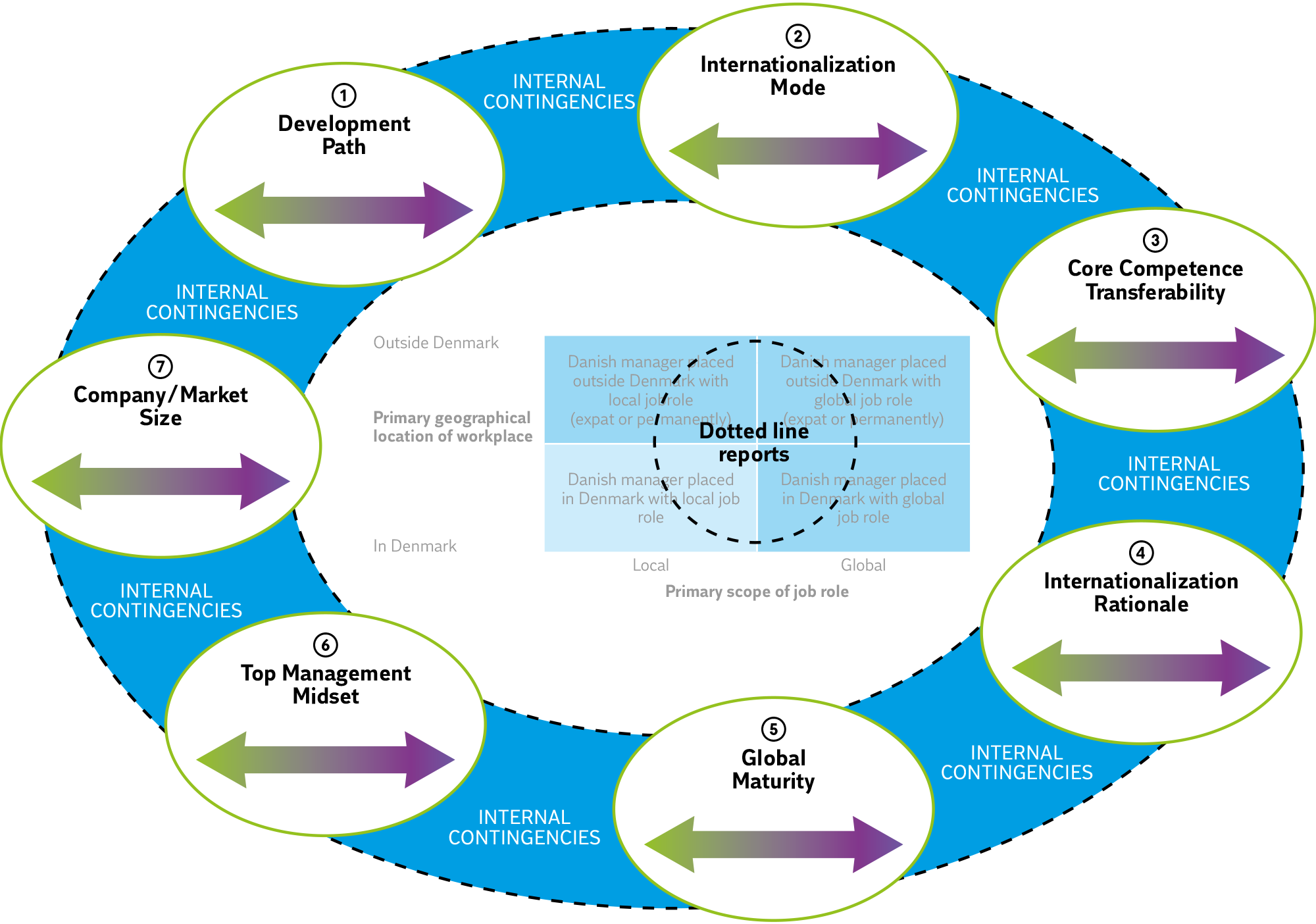
Figure 9.1: Contingencies for global leadership – 7 dualities
The seven indicators, the contextual factors, are marked with two-way arrows in the figure above and indicate that the global leader operates in a duality, in which they may be variously positioned between the extremes. The contextual factors are discussed individually below – but as a general observation it is vital to emphasize that there are no tipping points where the happy medium is necessarily worth striving for, or where one has to be strike a balance. We have presented them as contrasting pairs to emphasize that there will be grey areas rather than black and white distinctions. Moreover, it is not necessarily better to be positioned in one place rather than another – it depends where the leader, function, department or unit is heading. Although some of the extremes for the contextual factors will seem more attractive to most people than others, the purpose of the model is to plot your position rather than to determine the ”best” or the ”right” direction to be heading. For example, many people may feel that a globally mature senior management is preferable to filling the upper echelons with global beginners focused on their home markets. However, this will be outside the control of the individual global leader in the short to medium term, and has to be taken as a given. On the other hand, acting according to how one’s own global work is affected by the global mindset in senior management (or the lack of one) is something the individual leader can take a view on right away.
The seven contextual factors, or ”dualities”, described here can be used to assess the contingencies within which the global leader operates, in order to identify where there are particular challenges and perhaps also particular skills and development needs. Whether the global leader is based in Denmark or abroad, these contextual factors give rise to differing challenges, opportunities and development needs for the individual leader. The seven contextual factors can be used as indicators from which each person can take stock of their own position in the organizational landscape.
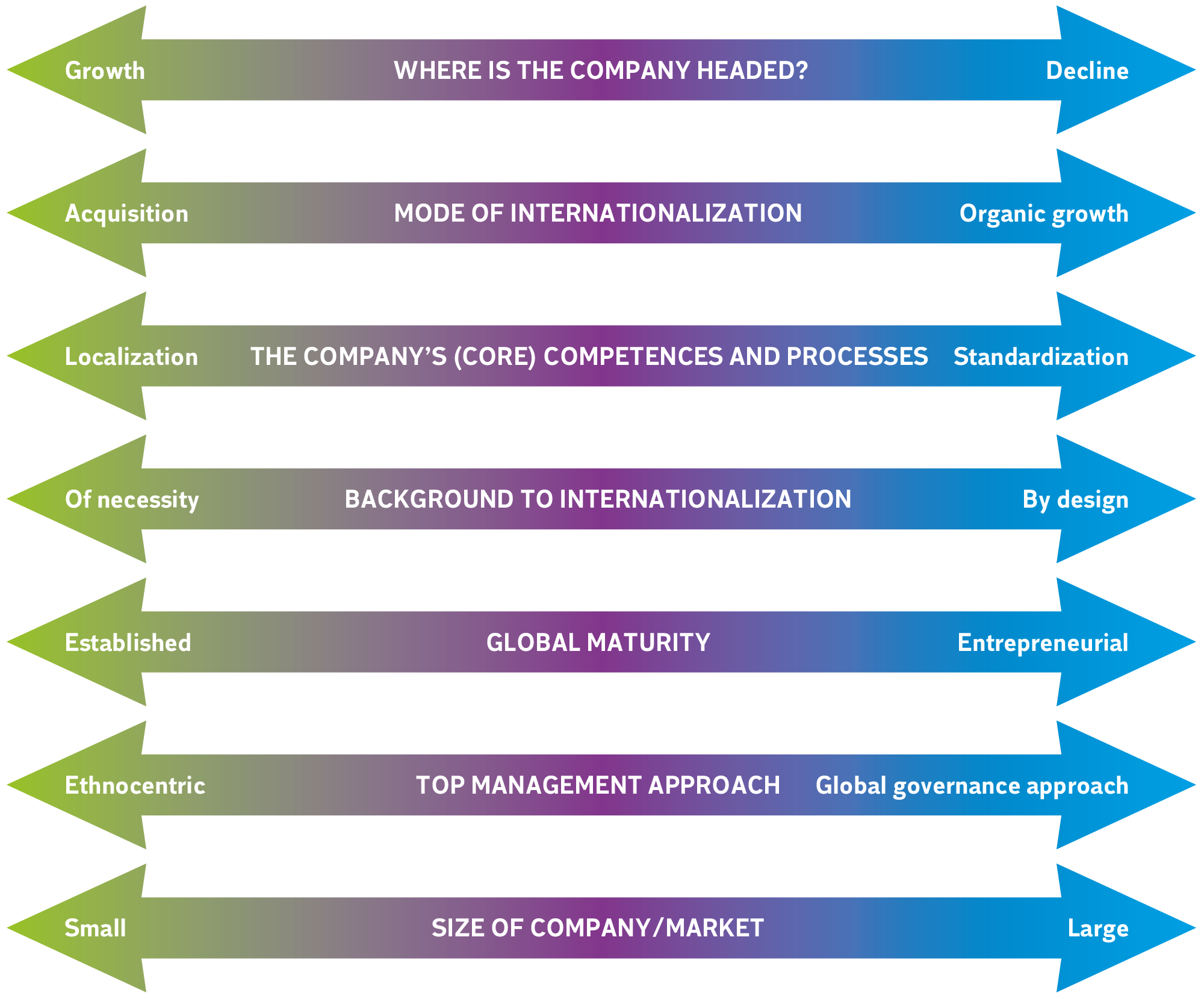
Figure 9.2: The seven dualities – organizational contingencies for global leadership
The model can be read as follows. Take as an example the arrow marked ”where is the company headed?”. The idea here is to discover whether the global leader is operating in an area marked by growth, stagnation or decline. This positioning can help to distinguish different types of global leadership from each other – and to include these contingencies as a key parameter for global leadership.
An illustration: If we pursue the example used here of growth/recession we could imagine two global leaders who both need to promote skills transfer and knowledge sharing, but under very different conditions. One leader needs knowledge to be shared as his/her functional area is to be assigned to another market, and the employees to be laid off in the leader’s function have to train up their colleagues in the new market in a transitional period leading up to their own departure. So this is an exercise in knowledge-sharing while sawing off the branch they are sitting on. A second global leader is about to expand into new markets and offer new products and services and needs to take care not to reinvent the wheel but to capitalize on the company’s existing expertise in the area to achieve time to market and efficient resource utilization. He/she probably has substantial resources available, support from top management and motivated staff fired by a spirit of curiosity. Two leaders with the same classical task in a global organization – to manage the transfer of core competences between markets – but under quite different circumstances which cause the same task to play out in very different ways.
An assessment of the globalization profile of a specific leadership job in terms of the growth/decline factor can therefore lead us to conclude that two leaders with apparently similar job specifications in practice face quite different tasks. So they are very unlikely to need identical development measures and supporting activities to succeed in their projects.
The leadership GPS is therefore a tool for assessing the internal contingencies within which the global leader operates, in order to pinpoint where there are particular challenges and development needs. The leadership GPS is a tool to position global leadership work based on seven sets of indicators or contextual factors. The seven contextual factors are the internal organizational context, the conditions and the working environment that shape and colour the specific global leadership practice. By using the GPS to position a global leadership job in relation to the seven contextual factors, we can draw a globalization profile for the individual job which can be used to identify particular challenges, including how the profile is affected by things like changes of role or organizational changes.
Each contextual factor is described below, then you can position your own global role in relation to each of the seven factors:

Is the company and/or the market in a period of growth with ample resources or in a situation marked by closures, cut-backs and rationalization?
The company’s situation – at both parent company and subsidiary level – affects the global leader’s day-to-day work. For example, passing knowledge and feedback from the subsidiaries to global leaders located in Denmark but with global responsibility, is absolutely vital. But effecting and facilitating this transfer may be a very different exercise depending on the circumstances behind it. There is a big difference between facilitating feedback processes and knowledge transfer from a foreign subsidiary that is fighting for its financial survival and a situation where with plentiful assistance and resources from the parent company.
Positioning questions:
Where is your part of the company headed? What characterizes the company or market and in what way? Growth or decline? What concrete impact does this have on your job content and associated competence needs?

Is the company establishing a global presence via mergers and acquisitions or through organic growth, e.g. by establishing foreign subsidiaries/branches – or a mix of the two?
The way in which the parent company grows and goes global is another of the factors that global leaders point to as something that influences their global leadership practice. For example, organic growth tends to progress at a slightly slower pace than when the business buys up other companies. When new units are to be established from the ground up, a certain element of entrepreneurship will be called for, which will often make for a very varied leadership role for the global leader. This is in stark contrast to a growth model in which the growth is generated through acquisitions and mergers. Here the leadership task is often dominated by involvement in due diligence processes and merger management.
Positioning questions:
How is your company establishing a global presence? Via mergers and acquisitions or through organic growth – or a mix of the two? What does this mean for your job content and related competence needs?

To what extent is it necessary to adapt skills and processes to meet local needs? And how feasible is it to transfer competences and processes unchanged from the parent company to foreign units or functions?
Global leadership practice is affected by the degree to which the company’s core competences are generally transferable across the markets in which the company is represented, and hence also conducive to standardization of resources, skills and strategies. A high proportion of non-transferable (core) competences may necessitate a certain amount of localization of operations in the subsidiaries in foreign markets. The same is true of the company’s processes and the mix of standardized and locally customized processes. It will often be found that the higher the degree of standardization across all of the units in the company, the more support the individual units can draw on from the parent company, and the more effective the knowledge-sharing that is likely to take place across the units. E.g. in the production of goods to be sold and distributed worldwide.
Positioning questions:
To what extent are skills and processes in the organization adapted to meet local needs (localization/diversity) in your part of the company? And how far can existing skills be transferred directly from HQ to foreign units or functions (standardization/alignment)? How does this affect your job content and competence needs?

Is the company proactively engaged with internationalization as a positive opportunity, or is it tagging along reactively because of customer demands for a global presence; or is it forced to take this route by low or negative growth rates in its national market?
The parent company’s rationale for globalization is a key contextual factor in the practice of global leadership. The globalization of the company has an indirect effect on global leadership practice, because the chances of improving the individual leader’s entry into a global leadership role (in any of the three categories) depends on whether this takes place at the planning stage, in the midst of the process, or in an ad-hoc manner. Many leaders find themselves starting out in their first global leadership role:
Positioning questions:
Is the company’s globalization process driven by design or necessity? What effect does this have on your job content, and what do you need to do to succeed?

Is the company mature and experienced in a global setting or (relatively) new in terms of running a global business? Was the global leader employed to run an ongoing business or to establish a new undertaking?
Global leaders’ leadership practice will vary according to the overall global maturity in the company and in the specific units they are responsible for. The rationale is that a well-established global company will typically have developed support functions, processes and templates that can support the process when new units are to be started up abroad. Similarly, they will often have HR functions that can help with payroll issues, finding a place to live and other such practical matters that go with working and possibly settling abroad. The opposite is often the case in companies that have only just embarked on globalization. When it comes to more business-related leadership tasks, it also makes a difference whether the global leader is assuming responsibility for a business that is already in operation or whether he/she is in at the start.
Positioning questions:
Were you employed to run an ongoing business or to establish a new undertaking? How does this affect your job content, and what do you need to do to produce the expected results?

Are one or more members of top management ethnocentric in outlook with a tendency to take a distinctly Danish approach and struggle to understand the work of the global leader? Or do they have international experience, e.g. from a foreign posting, and/or insight into global leadership?
The global leader’s day-to-day work will be influenced by the approach of top management to the way in which the business is managed. Their own international experience (or lack of it), the level of global mindset and of (realistic) expectations of the opportunities on the global market can pave the way for the global leader – or do the opposite. For example, there may be a risk of top management believing that the company is much more advanced in terms of globalization than the rest of the employees in the business think it is. This may be because top management often live a much more ”globalized” life than most other people in the organization. Or because the top management, because they know little or nothing about international markets, have rather unrealistic expectations of the business opportunities in going global and of the way in which a foreign unit can be run.
Positioning questions:
Does top management take a distinctly Danish approach to the task of leadership, or do they have some insight into and understanding of the work of the global leader? How does this affect your job content, and what skills do you need in this situation?

Is the company so large and influential in foreign markets that it can be a ”deal maker” rather than a ”deal taker”? In other words, to what extent does the company itself set the standard in different areas as opposed to having to accommodate itself to customers’ and competitors’ standards?
The size of the company is also seen by the global leaders as a key contextual factor in relation to their leadership practice. Mainly in the sense that, the bigger the global companies are, the more confidence they have in their ability to be ”deal makers” and not (just) ”deal takers”. This is a question of the degree to which the individual company can insist on applying its own standards and processes to local units, customers and employees. And the extent to which the company is more or less forced to adapt to local norms in order to be accepted or regarded as legitimate. Add to this a large number of the factors that are also familiar from domestic companies and the differences that can come with size. For example, large companies often have strong back-office functions which can support the leader, so they do not have to kick off new activities on their own. There is usually help to be found and previous experience to draw on. On the other hand, large organizations can be hard work to navigate and difficult to effect rapid change in, whereas leaders in small and medium-sized enterprises are often more alone and have to gather the experience themselves, but will often find the organizations more agile and manoeuvrable.
Positioning questions:
Is the company big enough in the market to be able to set the standard in different areas, or do you usually have to accommodate yourself to customers’ and competitors’ standards? How does this affect your job content and what skills do you need in connection with this?

It could be argued that contextual factors are not in themselves uniquely and exclusively tied to global leadership, given that one can hardly point to a single leadership activity that is not heavily influenced by e.g. understanding (or the lack of it) from top management, recession or growth scenarios, organizational maturity/immaturity in relation to a specific task (and so on up to seven), whether we are talking about lean processes, talent management, CSR or something else entirely. The factors presented here are those which global leaders in our survey identified as particularly relevant to their day-to-day work, but there may be a duality from your global context that the leader the Academy spoke to were not aware of. If so, you can describe the extra contextual factor(s) here:
You can plot your global leadership GPS coordinates on your own globalization map in the figure below, by placing a cross or an arrow to indicate your position on each of the seven dualities (and any extra factors you have chosen to include):
Figure 9.3: Your global leadership coordinates
You have now made a sketch of where you are in the leadership GPS, i.e. the space that frames your global leadership practice. So what now?
Nielsen, Rikke Kristine with Nielsen, Jens Boye. Global leadership practice and development revisited. Exploring 3 roles – discovering 7 dualities. Copenhagen: Global Leadership Academy – Copenhagen Business School and Danish Confederation of Industry, 2016.
Reiche, B. S., Bird, A., Mendenhall, M. E., & Osland, J. S. (2017). Contextualizing leadership: a typology of global leadership roles. Journal of International Business Studies, 48(5), p. 552-572.
Nielsen, R.K. (2016). Globale ledere har ingen uddannelse. Jyllands-Posten, January 12, 2016.
Thøger, L. & Lyndgaard, D.B. (2016). Tre nye globale ledertyper og fire råd til globale ledere. Global Leadership Academy-website, October 7, 2016.
Mortensen, S. W. (2016). Fra Skive til Shanghai – danske ledere famler på udebane, Jyllands-Posten, October 9, 2016.
Nielsen, R.K. (2016). Danske ledere mangler globale evner. Jyllands-Posten, October 7, 2016.
Thøger, L. & Lyndgaard, D.B. (2016). Nyt værktøj til at styrke global ledelse, Global Leadership Academy-website, October 7, 2016.
Nielsen, R.K. (2017). Hvor global en leder tror du selv, at du er? Jyllands-Posten/Finans.dk, July 25, 2017.