
Chapter 6
Tool 4:
Four leadership roles in a global context
Tool 4
Why: Who are the global leaders – and what do global leaders actually do? If we treat global leaders as a homogenous group characterized by similar challenges and competence needs, there is a great risk of mixing apples and oranges into something that seems to go together but misses vital nuances. At the same time, there has traditionally been a tendency to think of global leadership as something that goes on outside the original culture of the leader or the organization, a view that does not reflect modern virtual matrix and project organizations, where the global element is present both ”home and away”. A broader but also more nuanced view of global leaders and their leadership practice is helpful to grasping both what raises problems and what produces performance in global leadership.
What: What type of global leadership role do you perform? And what is the ”glocalization balance” in your leadership role, i.e. your mix of global and local leadership tasks? Reflect your own practice in that of other global leaders, as it emerges from an extensive study of global leadership tasks in Danish multinationals, and identify your global job profile. This sort of profiling is especially interesting when you change roles; both when you move from a more locally oriented role to a global one, and also – perhaps unnoticed – when you move between different forms of global leadership work, which may at first seem like more of the same, but call for quite different skills beneath the surface.
How and who: Use the tool to clarify individual roles, perhaps as a way into discussions of development and career opportunities in your company, e.g. with your immediate manager and HR.
In one of the Global Leadership Academy’s research projects, we set out to discover what global leaders in Danish companies actually do, in their own words. In other words, to find out what the people practising global leadership believe that this management discipline requires – which is not necessarily the same thing as what the research literature or the HR department suggest that global leaders should be doing.
A first step is to identify who is actually included in a ”superset of global leaders”. A traditional approach to global leadership has been to focus on expatriate managers, but this is too narrow a view of modern global leadership. As leadership researcher Vladimir Pucik points out, there are ”some global managers may be expatriates; many, if not most, have been expatriates at some point in their career, but probably only few expatriates are global managers.” (Pucik, 1998, p. 41). So a person does not automatically play a particularly global role simply because they have been posted away from home. Pucik also emphasizes that the opposite may be true, in that ”at the same time, local managers in lead countries may not be expatriates, but they will need a global mindset.” (Pucik, 2006, p. 88). The superset might then include both expatriate managers and those working locally in markets outside their country of origin, and also people working globally and transversely from a desk in head office..
In line with the research literature in this area, our experience at the Academy has been that global leadership can be regarded as an umbrella term which takes in many very different leadership tasks. Moreover, there is often a similarity of titles and hierarchical levels in an organization without the global leadership tasks contained in identical job descriptions necessarily resembling each other, whereby the same titles at the same level in the same organization may mask very different global leadership tasks and skillsets.
We therefore opted to view global leadership as a collective term for different types of global leadership role rather than seeing ”global leaders” as a coherent group with common challenges and opportunities. This perspective produced the following breakdown:

What do you think characterizes a ”global” leader?
How is ”global leadership” different from local leadership? Give examples from your own experience
How do you ensure that global leadership is not necessarily tied to geography, titles or staff responsibility?
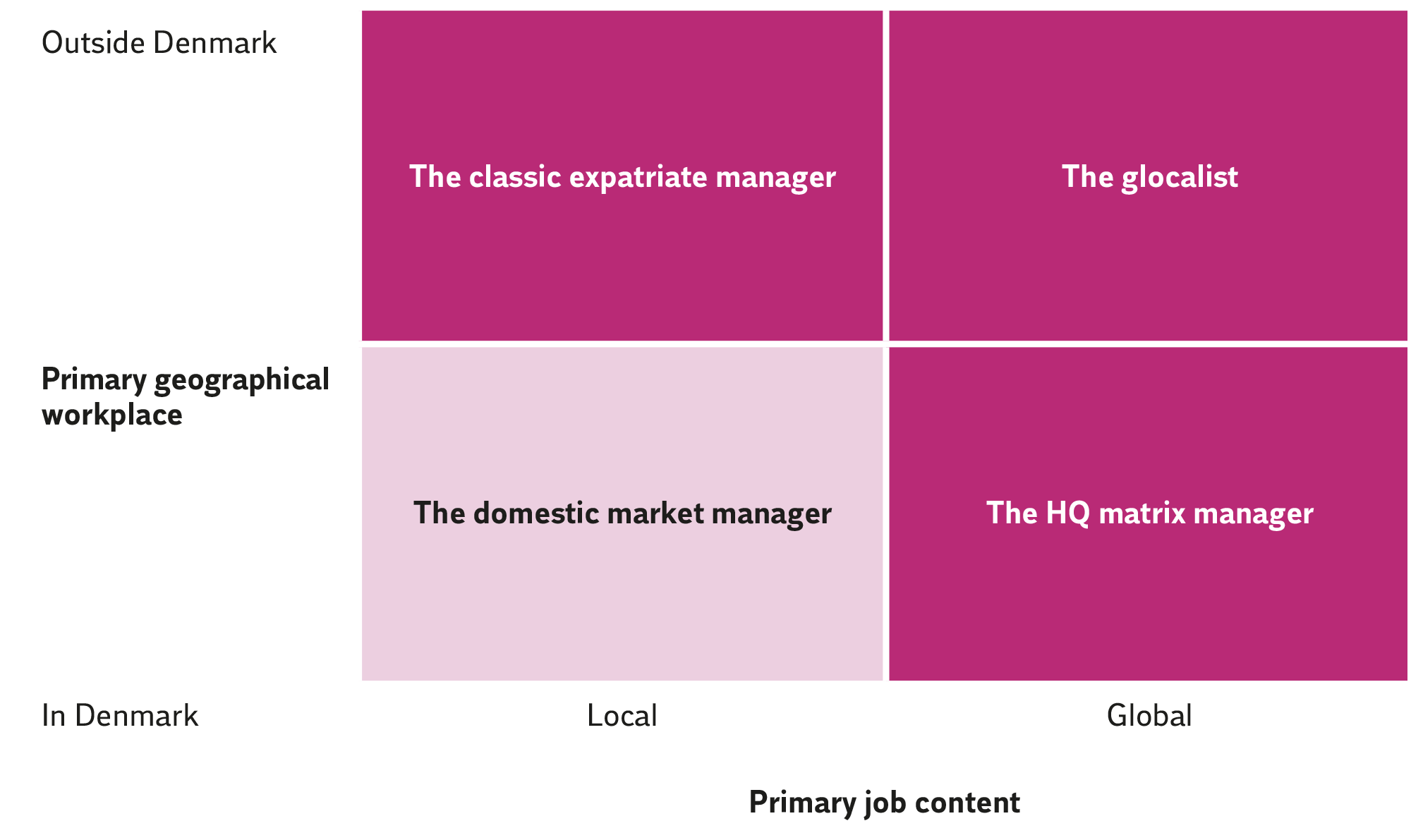
Figure 4.1: Role types in global leadership
The groups of leaders are categorized according to their primary job description (is the role mainly directed at the company’s horizontal processes, which cover all or many different markets/countries, or is it mainly focused on local KPIs and activities in one or a few markets?) and their geographical location (inside or outside Denmark?). Not all global leadership jobs are equally global; different jobs contain differing mixes of globally and locally oriented responsibilities. So the job of global leader may be characterized by varying numbers and types of global task. Whether the global leader is based in Denmark or abroad, these differences give rise to differing challenges, opportunities and development needs for the individual leader. In other words, global leadership jobs encompass differing mixes of local and global. As the work of the Academy has been concerned with global leadership from a Danish perspective, with a view to enhancing Danish competitiveness, the right-hand side of the figure makes the distinction ”inside/outside Denmark”. In this case, Denmark will be the company’s country of origin, where it has its headquarters. As we wanted to keep the cultural factor constant in our study, we have assumed a situation where the leader’s national and cultural background is the same as the country of origin of the company where he/she works.
The figure outlines four types of leadership role in the global enterprise, three of which can be described as global in one way or another, and one as local:
Where the first three types are global in various ways, the fourth is not. Our study of global leadership in practice, based on the job content of the different leadership roles, therefore disregarded this fourth category. However, this category should not be forgotten in the overall picture, as it will often include a substantial number of managers and is a group from which the next generation of global leaders will be recruited, or which former global leaders move (back) into at a certain point in their careers.
Where would you place your global leadership job? Why?
Does your present job profile place you in more than one quadrant? Describe how this is and where there may be overlapping activities.
Have you acquired experience from earlier in your career of a leadership role in one of the other quadrants? How does your experience (or lack of it) affect your present leadership role and work with leaders doing other types of global work? Please give concrete examples.
By way of input to your own work of searching out various types of global leadership work in your own role, you can find inspiration in the profiles that our study of Danish global leaders arrived at based on the job content of the individual role. Through 40 short interviews with global managers from 25 Danish multinationals, we attempted to pin down how the job profile for the various groups looks from the standpoint of the global leaders themselves (their actual job description may very well say something different). Use them as a mirror (or possibly scare story) for your own practice – who do you have most in common with? What is your particular mix of tasks? What is the glocalization balance in your job? And how can your current skillset be adapted if you move into a different type of global leadership role?
Keywords for the global job profiles for the HQ matrix manager, the classic expatriate manager and the ”glocalist” are presented below:
Nielsen, Rikke Kristine with Nielsen, Jens Boye. Global leadership practice and development revisited. Exploring 3 roles – discovering 7 dualities. Copenhagen: Global Leadership Academy – Copenhagen Business School and Danish Confederation of Industry, 2016.
Thøger, L. & Lyndgaard, D. B. (2016). Tre nye globale ledertyper og fire råd til globale ledere. Global Leadership Academy-website, globalleadershipacademy.dk, October 7, 2016.
Nielsen, R.K. (2014). Handel globalt og lokalt. Jyllands-Posten, October 22, 2014.
Pucik, V., & Saba, T. (1998). Selecting and developing the global versus the expatriate manager: A review of the state-of-the-art. People and Strategy, 21(4), 40.
Reiche, B. S., Bird, A., Mendenhall, M. E., & Osland, J. S. Contextualizing leadership: a typology of global leadership roles. Journal of International Business Studies, 1 – 21. Online publication in advance of publication.
Pucik, V. (2005). Reframing global mindset: From thinking to acting. In Advances in global leadership (pp. 83‑100). Emerald Group Publishing Limited.
Bird, A. & Osland, J. S. (2004). ”Global Competencies: An Introduction”. In: H.W. Lane, M. L. Maznevski; M. E Mendenhall, & J. McNett (eds.), The Blackwell Handbook of Global Management. A Guide to Managing Complexity. Oxford, UK; Blackwell Publishers, pp. 57 – 80.