
Chapter 5
Tool 3:
The four obstructions in global leadership
– your ”global leadership manifesto”
Tool 3
Why: Global leadership is an imprecise and very general term. In discussions we have often heard comments like ”what do you actually mean by global?”, ”you define it in a completely different way than me”, ”I don’t actually think what you are saying is specific to globality”, and so on. The more precisely you can express yourself, the easier it will be to start a productive discussion of global leadership, not least to establish where you yourself have the most issues with your personal leadership style and the context in which you find yourself. This also makes it easier to put your finger on where there is a need to upgrade your skillset, and what you need to do to get better at handling any sticking points that emerge.
What: This tool characterizes global leadership as leadership subjected to four obstructions; i.e. four elements that are each present and challenging in their own way when leadership is to be practised in a global context. These elements cast the manager as an inter-cultural leader, bridge-builder and boundary-spanner, paradox-navigator and knowledge broker and networker. Based on the questions for reflection on the nature of the individual leadership jobs and the leader’s perception of the degree of difficulty, he/she can draw up a personal ”global leadership manifesto” summarizing the obstructions most likely to trip up the individual leader, where their strengths lie, and where it is most appropriate to spend resources on development.
How and who: The tool can be used by global leaders, ideally together with their own immediate managers, HR professionals and colleagues/other sparring partners, in order to get better at identifying and developing global competence.
There is no grand unified theory of leadership, and the prominent leadership researcher Warren Bennis stresses that ”…we must remember that the subject is vast, amorphous, slippery, and, above all, desperately important” (2007, p. 62). Some leadership researchers even wonder whether the idea of ”good leadership” is a mirage which we (vainly) chase after like the crock of gold at the end of the rainbow.
The difficulties of agreeing on a good definition of what leadership actually is are certainly not reduced by prefixing it with the word ”global” – on the contrary, there are myriad definitions of global leadership. One of the most recent shots at the problem defines global leadership as ”the processes and actions through which an individual influences a range of internal and external constituents from multiple national cultures and jurisdictions in a context characterized by significant levels of task and relationship complexity.” (Reiche, Bird, Mendenhall & Osland, 2016, p. 556). A loose paraphrase of this definition might be ”Leadership as we know it – only much worse”… But in what way is it ”much worse”? More complex? More diverse? The confusion around what global leadership actually is, and how it manifests itself in practical terms in the individual, makes it necessary to be very precise and explicit about what we really mean when the subject is ”global leadership”, or rather what aspects of global leadership we wish to zoom in on. This tool aims to provide this precision.
The name of the tool is inspired by the film The Five Obstructions from 2003, where two of the bad boys of Danish cinema challenged each other to a cinematic experiment. Lars von Trier had the idea that Jørgen Leth should remake his own short ”The Perfect Human” (1967), but this time observing certain rules to be formulated by von Trier. Jørgen Leth was to shoot the film five times in all, each time observing these new rules which Leth himself had no influence over. Global leadership is similarly characterized by the fact that ”globalization”, or ”globality” as it is sometimes called in English, sets new rules and constraints on a person’s leadership. In one of the research projects carried out at the Global Leadership Academy, we trawled through the research literature in this area and arrived at four obstructions in global leadership, each imposing its own constraints and calling upon particular skills and behaviours, as shown in the figure below.
Each of the four obstructions is presented below with the associated questions for reflection, which can be answered and used as input to an eventual personal ”global leadership manifesto”.
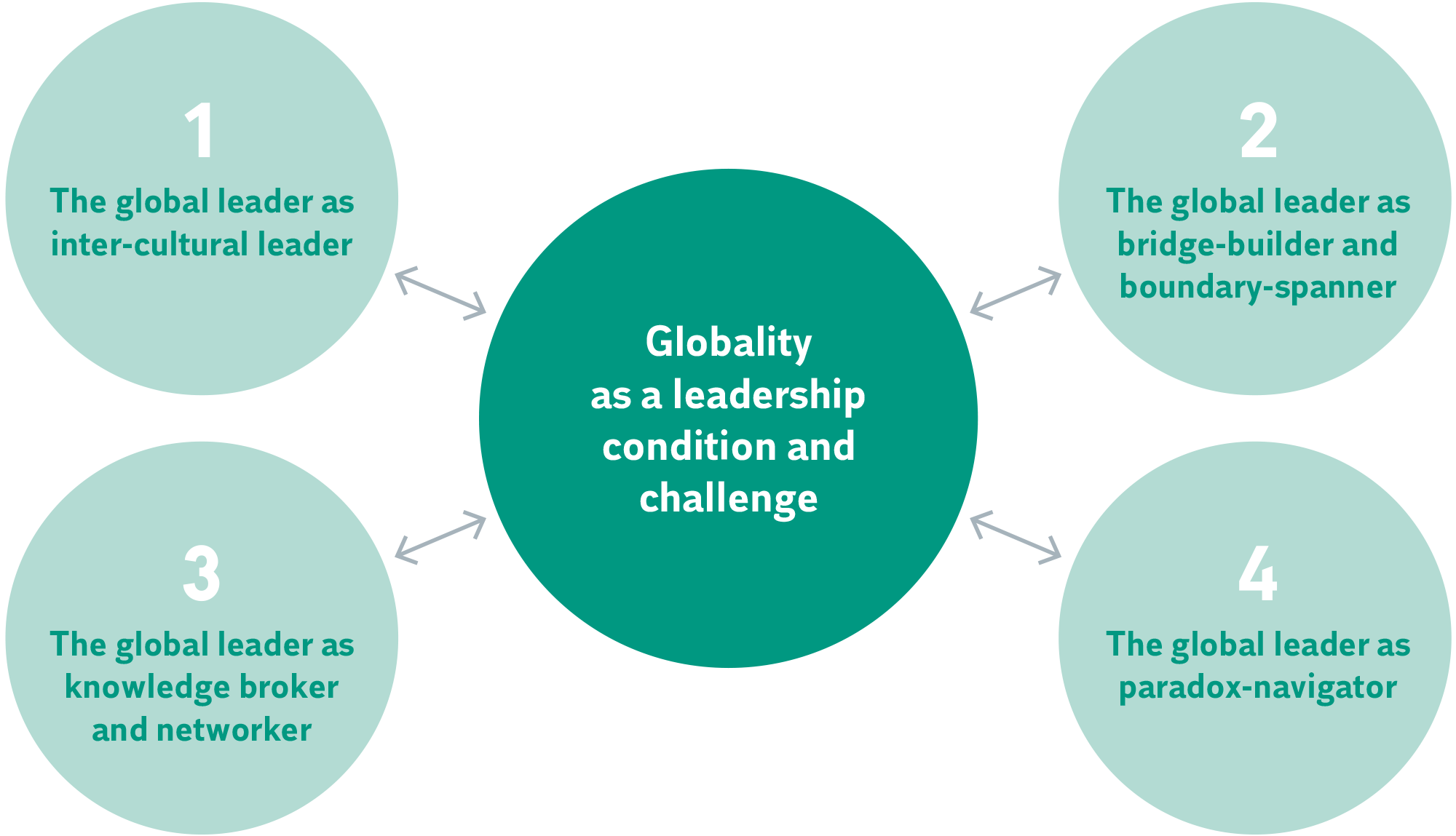
Figure 3.1: Four obstructions in global leadership
The traditional approach to global leadership has focused mainly on how (national) cultural differences affect the way in which we prefer to practise and respond to leadership. The classic example here is typically the expatriate manager or the manager with direct staff responsibility for employees from other (national) cultures. In this perspective, ”international/global” is often contrasted with ”national/local”. It might be a Danish manager posted to Japan or a Danish team leader responsible for a team in South Africa from his desk in Denmark.
The ability to handle leadership across cultures is an essential element of the global leader’s work. It is not always the case that the global leader is resident abroad, and many leaders increasingly have to address and manage diversity both at home and away. In more recent versions of this perspective on the ”global leader”, we come across concepts like ”inter-cultural competence” and ”inter-cultural intelligence”. Both focus on the leader’s ability to operate in culturally diverse situations. These may arise from day to day in a Danish workplace, where the leader’s staff, colleagues and own manager come from different cultural backgrounds, or where the leader goes out into the world, whether physically or virtually, to manage teams with employees from different nationalities and cultures.
The term ”inter-cultural competence” comes originally from studies of what characterizes employees, and especially managers, who succeed in what may be called ”cultural encounters”. In other words, situations in which the individual leader meets and has to work with various internal and external stakeholders from cultures other than their own. Inter-cultural competence may be defined as people’s ability to adapt themselves and their actions when they work with people from other cultures. So the individual leader has to be competent not only in relation to other quite specific cultures but also in situations where cultural encounters simply happen, whichever other cultures are involved and wherever the encounters take place.

In what situations can you recognize the role of inter-cultural leader from your day-to-day work?
What experience do you have of the role of inter-cultural leader?
What skills do you draw on when you succeed in the role of inter-cultural leader?
In what situations do you find the role of inter-cultural leader difficult?
The complexity that characterizes many global organizations often brings both increased uncertainty and mutual dependence between individuals and units. People may not necessarily meet in the physical sense but in many cases mainly in a virtual universe. To provide the necessary cohesion, there is an urgent need for ”bridge-builders”. Because the global leader is in a position to act as a link between the business and the world around it, he/she has a special potential and a special job to do in this context: To promote understanding, influence and legitimacy across the organization and (national) cultures.
Leaders who have a foot in many different (cultural) camps can bind the organization together by spreading knowledge and understanding across it. In a complex global organization there is a need for the most frictionless and efficient collaboration across all national and professional cultures, and the global leader occupies an important position in terms of contributing to this.
In this perspective, the global leader can thus be seen as a bridge-builder and boundary-spanner, and globality should ideally be perceived as ”boundaryless” in a positive sense, because boundaries here do not refer to frontiers between countries but to differences and opportunities for the global leader to help create a feeling of cohesion in actions, relationships and collaboration between people.
Bridge-building as a leadership issue is not only relevant in situations where there are national frontiers to be crossed. Management across and between organizations is a leadership issue whether the leader’s geographical workplace is at home or abroad. However, the complexity is drastically increased when it comes to collaboration across geographical areas and national cultures, and this is where leaders as boundary-spanners really come into play.
In what situations can you recognize the role of bridge-builder and boundary-spanner from your day-to-day work?
What experience do you have of the role of bridge-builder and boundary-spanner?
What skills do you draw on when you succeed in the role of bridge-builder and boundary-spanner?
In what situations do you find the role of bridge-builder and boundary-spanner difficult?
If we view organizations as a form of knowledge structure, the job of gathering and disseminating knowledge, information and ideas becomes one of the biggest tasks in a complex global business.
Seen in this light, the global leader plays an essential role in terms of ensuring that information and knowledge are not just distributed and shared, but that what is communicated is properly understood in the local context. That means that the global leader has an absolutely vital job to do in acting as a mediator and translator between the many different worlds and points of view that will typically exist within the organization.
This is particularly true of those leaders who have a role in which they act as links between the company’s head office and the local units, including expatriate managers who often serve several ”masters” and perspectives at the same time. These leaders are in a very special position, because they have insight into and obligations towards several places at once. However, in order to exploit this special position, it is necessary for the global leader to have strong networking and communication skills, and to be able to reduce the challenges by spanning mental, geographical and/or hierarchical boundaries in the organization, as described in connection with the second obstruction. The ability to build trusting relationships and strong networks then become complementary skills in relation to knowledge sharing and collaboration across the organization.
In what situations can you recognize the role of knowledge broker and networker from your day-to-day work?
What experience do you have of the role of knowledge broker and networker?
What skills do you draw on when you succeed in the role of knowledge broker and networker?
In what situations do you find the role of knowledge broker and networker difficult?
For the global leader, both diverse cultures and the complexity of organizations are everyday facts of life, and the leader has an important role to play when this complexity is to be conveyed in a meaningful way to the rest of the organization. A paradox is a ”both-and” situation where there is no ”either-or” solution. There are often situations with opposing demands and expectations which cannot be evaded, such as a requirement to promote innovation while operating as efficiently as possible. As a paradox-navigator, the leadership task is to find and create (temporary) oases of sufficient clarity for the organization to overcome the challenges and accept that it is working in several (sometimes conflicting) fronts at the same time.
The leader then has to be able to create flow in an otherwise fragmented and often confused situation.
One approach to leadership in handling paradoxes is to accept them as a given and interpret the complexity as a set of paradoxes to be navigated through. The leader therefore has to take a ”both-and” approach and not an ”either-or” view. Paradoxes are not the same as dilemmas, where you find yourself ”between a rock and a hard place”, where you can and must make a choice and live with the consequences of it. The global leader has to find a way of navigating around these paradoxes from day to day, while he/she and the rest of the organization live and work with them.
One example of a paradox is where there is a need to standardize and harmonize methods, processes etc. across the whole company while also having to adapt them to accommodate local differences. Another example is dealing with different strategies in different markets or product areas within the company. Being able to navigate the paradoxes that this raises is an inevitable task for the global leader. Being able to navigate through the complexity and the accompanying paradoxes when the company has many parallel and possibly conflicting agendas and strategies is one of the skills the global paradox-navigator has to possess.
In what situations can you recognize the role of paradox-navigator from your day-to-day work?
What experience do you have of the role of paradox-navigator?
What skills do you draw on when you succeed in the role of paradox-navigator?
In what situations do you find the role of paradox-navigator difficult?
Based on all of the considerations and ideas that came out of the questions for reflection above, you can now formulate a personal ”global leadership manifesto” which highlights your most important challenges and areas for development in global leadership. The manifesto can be used as input to your participation in leadership activities, so you can focus on what to take away from them. The manifesto can also be exchanged with others to calibrate your own perceptions against their experience.
The manifesto should be brief, no more than half a page, and should ideally consist of a set of one-liners or ”tweets” (which, as we know, can be up to 140 characters). Individual ”tweets” may be used as a screensaver for your laptop, so you will always remember the key points.
By way of inspiration, you could complete the following sentences, which together make up a summary of global leadership:
Bennis, W. (2007). The challenges of leadership in the modern world: introduction to the special issue. American Psychologist, 62, p. 2 – 9.
Örtenblad, A.; Hong, J. & Snell, R. (2016). Good leadership: A mirage in the desert?. Human Resource Development International, 19, p. 349 – 357.
Nielsen, R.K. (2014). ”Ledelse med globalt mindset – lederkompetencer i det globale”. In: F. Poulfelt (ed.), Børsens Ledelseshåndbøger, Strategi & Ledelse. Copenhagen: Børsens Forlag.
Nielsen, R.K. (2011). Kompetence-spotting i det globale ledelseslandskab: På udkig efter ”global mindset”. Ledelseidag.dk, No. 10, November, 2011.
Nielsen, R.K. (2014). Global Mindset as Managerial Meta-competence and Organizational Capability: Boundary-crossing Leadership Cooperation in the MNC. The Case of ”Group Mindset” in Solar A/S. Doctoral School of Organization and Management Studies, PhD Series; 24, 2014.
Reiche, B. S., Bird, A., Mendenhall, M. E., & Osland, J. S. (2017). Contextualizing leadership: a typology of global leadership roles. Journal of International Business Studies, 48(5), p. 552 – 572.